

 |
|
|
|
- I'm Online Chat Now
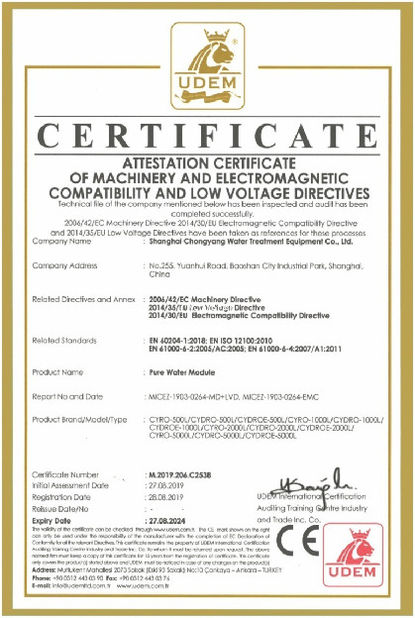
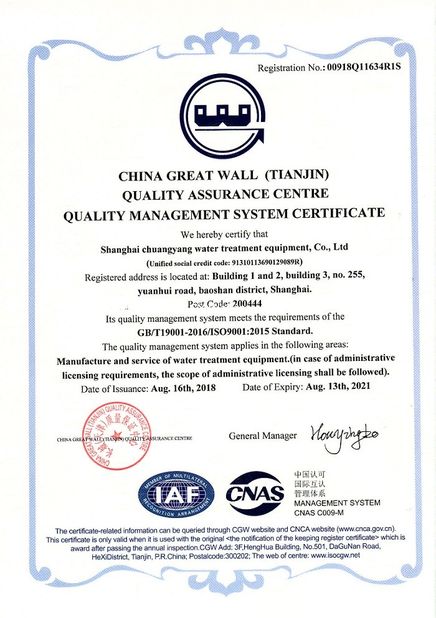
Certification
Company News
How Much Does a Seawater Desalination Plant Cost?

What Is the Cost of a Seawater Desalination Plant?
A complete engineering guide to understanding SWRO desalination plant cost, including capacity, seawater conditions, pretreatment, energy consumption, equipment selection, and project requirements.
Introduction
The cost of a seawater desalination plant depends on multiple engineering factors, including plant capacity, seawater quality, pretreatment requirements, reverse osmosis technology selection, energy consumption, equipment materials, automation level, and installation conditions.
There is no fixed price for a seawater desalination system because every project requires customized engineering design according to local environmental conditions and water demand.
For industrial users, hotels, coastal communities, offshore facilities, and municipal water projects, the most common technology is Seawater Reverse Osmosis (SWRO).
A complete SWRO plant is not only an RO membrane system. It includes seawater intake, pretreatment, high-pressure pumping, energy recovery devices, RO membrane units, post-treatment, automation systems, storage tanks, and distribution equipment.
What Determines the Cost of a Seawater Desalination Plant?
The investment cost of a seawater desalination system is usually divided into two main categories:
CAPEX
Capital Expenditure includes equipment investment, engineering design, installation, and commissioning costs.
OPEX
Operating Expenditure includes electricity, membrane maintenance, filter replacement, chemicals, labor, and spare parts.
A properly designed system should balance initial investment and long-term operating cost.
1. Plant Capacity and Water Production Requirement
The first factor affecting seawater desalination plant cost is the required production capacity.
Typical seawater desalination capacities include:
- Small systems: 5–100 m³/day
- Medium systems: 100–1000 m³/day
- Industrial systems: 1000–10000 m³/day
- Large municipal plants: Above 10000 m³/day
Larger desalination plants usually require:
- Multiple RO trains
- Larger seawater intake structures
- Higher capacity high-pressure pumps
- Advanced automation systems
- Larger civil construction work
For example, a 100 m³/day seawater desalination system for a coastal resort has completely different requirements compared with a 5000 m³/day industrial water supply project.
2. Seawater Quality and Pretreatment Requirements
Raw seawater conditions strongly influence the system design and overall project cost.
Important parameters include:
| Parameter | Influence on System Design |
|---|---|
| TDS (Total Dissolved Solids) | Determines RO operating pressure requirement |
| Turbidity | Determines filtration and pretreatment requirements |
| SDI (Silt Density Index) | Affects RO membrane protection |
| Temperature | Influences membrane performance |
| Organic Matter | Determines pretreatment method |
| Algae Concentration | May require additional filtration such as UF |
3. SWRO Main Equipment Configuration and Cost Factors
A seawater reverse osmosis plant consists of several key engineering sections. Each section affects the total investment cost and long-term operating performance.
| System Section | Main Equipment | Influence on Cost |
|---|---|---|
| Seawater Intake | Intake pipe, pump station, screens, pipelines | Depends on offshore distance and construction conditions |
| Pretreatment | Multimedia filter, UF system, cartridge filter | Determined by seawater quality |
| High Pressure System | High pressure pump, motor, VFD | Major impact on energy consumption |
| Energy Recovery | Pressure exchanger or turbine recovery system | Reduces electricity cost |
| RO System | RO membranes, pressure vessels, piping | Depends on capacity and recovery rate |
| Automation | PLC, HMI, instruments, remote monitoring | Depends on control requirements |
4. Seawater Intake System
The seawater intake system is the first stage of an SWRO project and can significantly influence project cost.
Common intake methods include:
- Open seawater intake
- Beach well intake
- Submerged intake pipeline
- Near-shore intake system
Factors affecting intake cost include:
- Distance from coastline
- Water depth
- Wave conditions
- Marine environment
- Civil construction requirements
5. SWRO Pretreatment System
Pretreatment protects RO membranes from fouling and determines the stability of long-term operation.
Typical pretreatment configurations include:
Seawater Intake → Screen Filtration → Multimedia Filtration → Ultrafiltration (Optional) → Cartridge Filter → High Pressure Pump → RO System
Common pretreatment equipment:
- Multimedia filters
- Activated carbon filters (when required)
- Ultrafiltration membranes
- Security cartridge filters
- Coagulation and chemical dosing systems
6. Chemical Dosing System
Chemical dosing is required to maintain RO membrane performance and protect the system.
- Antiscalant dosing to prevent scaling
- Coagulant dosing for suspended solids control
- pH adjustment when required
- Cleaning chemicals for RO membrane maintenance
7. High Pressure Pump and Energy Recovery System
The high-pressure pump is one of the most important components because SWRO requires high operating pressure.
Energy Recovery Device
Modern SWRO plants often use pressure exchanger technology to recover energy from concentrated seawater reject flow and reduce electricity consumption.
8. RO Membrane System Design
The reverse osmosis membrane system is the core desalination section where dissolved salts are removed from seawater under high pressure.
The RO system design depends on:
- Required product water capacity
- Seawater TDS level
- Operating pressure
- Recovery rate
- Membrane type and quantity
- Water quality requirement
Typical SWRO Membrane Components
- RO membrane elements
- Pressure vessels
- High pressure piping
- Flow meters
- Pressure monitoring instruments
- RO cleaning system (CIP)
Typical Seawater Desalination Plant Cost Range
The following values are only general engineering references. Actual project cost depends on location, seawater conditions, equipment selection, and installation requirements.
| Capacity | Application | Main Cost Factors |
|---|---|---|
| 5–100 m³/day | Hotels, islands, small communities | Compact equipment, intake method, automation |
| 100–1000 m³/day | Industrial and commercial projects | Pretreatment, pumps, RO trains |
| 1000–10000 m³/day | Large industrial plants | Civil work, energy recovery, multiple RO trains |
9. Automation and Control System
Modern SWRO plants use automatic control systems to improve reliability, safety, and operational efficiency.
- PLC and HMI control
- Automatic pressure control
- Conductivity monitoring
- Flow and pressure monitoring
- Remote operation and data recording
- Alarm and protection functions
SWRO Production Process
A complete seawater desalination process integrates intake, pretreatment, high-pressure reverse osmosis, energy recovery, and freshwater production.
→
Seawater Intake System
→
Pretreatment System
→
High Pressure Pump
→
Energy Recovery Device
→
RO Membrane System
→
Fresh Water Storage & Distribution
How to Reduce Seawater Desalination Plant Cost
- Optimize pretreatment according to seawater conditions
- Select high-efficiency energy recovery devices
- Improve RO membrane design and recovery rate
- Use efficient high-pressure pumps
- Design suitable automation level
- Consider total lifecycle cost instead of only initial investment
Frequently Asked Questions
Q1: What is the biggest cost factor in an SWRO plant?
A:
Energy consumption, high-pressure pumps, pretreatment requirements, and plant capacity are major cost factors.
Q2: Does seawater quality affect desalination cost?
A:
Yes. Poor seawater quality requires more advanced pretreatment and increases operating cost.
Q3: Is energy recovery necessary for large SWRO plants?
A:
Yes. Energy recovery significantly reduces electricity consumption in modern large-scale desalination systems.
Why Choose CHONGYANG WATER?
- Professional SWRO desalination engineering experience
- Customized seawater treatment solutions
- Complete system design from intake to freshwater production
- Energy-efficient RO technology
- Advanced automation and monitoring systems
- International project support
Need a Customized Seawater Desalination Solution?
Send us your:
✓ Required Capacity
✓ Seawater Analysis
✓ Installation Conditions
✓ Water Quality Requirements
CHONGYANG WATER provides complete SWRO engineering solutions from design to commissioning.
Contact Our Engineering Team
Pub Time : 2026-07-14 18:49:54
>> News list
Contact Details
Shanghai ChongYang Water Treatment Equipment CO.,LTD.
Contact Person: Ms. Yanni.Wang
Tel: 86 15900488030
Fax: 86-21-66126659
Send your inquiry directly to us