

 |
|
|
|
- I'm Online Chat Now
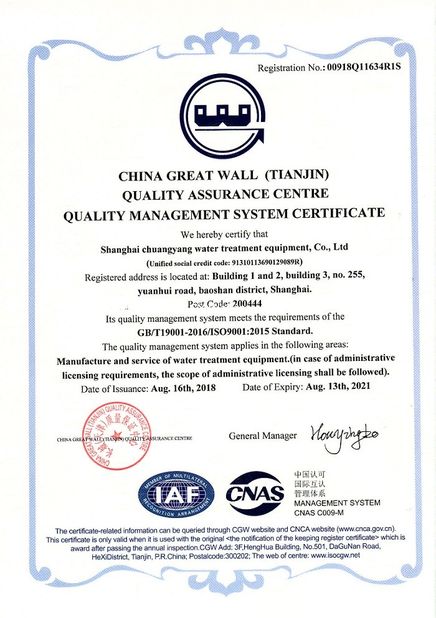
Certification

Company News
Key Components of a Seawater Reverse Osmosis Plant

Key Components of a Seawater Reverse Osmosis Plant
Introduction
A seawater reverse osmosis plant is a complete treatment system designed to convert high-salinity seawater into fresh water for municipal, industrial, hotel, resort, island, offshore, and process-water applications.
Unlike conventional brackish-water RO systems, seawater desalination operates under much higher osmotic pressure and must handle elevated salt concentration, suspended solids, microorganisms, organics, and potential membrane fouling.
For this reason, the performance of an SWRO plant depends not only on the RO membranes, but also on the correct selection and integration of every major component.
Understanding the main seawater RO plant components helps project owners evaluate system reliability, energy consumption, water recovery, maintenance requirements, and total lifecycle cost.
Typical SWRO Process Flow
A typical seawater desalination system may be configured as follows:
Seawater Intake
Pretreatment
Cartridge Filter
High-Pressure Pump
SWRO Membranes
Energy Recovery
Post-Treatment
Product Water Tank
Mobile: Swipe horizontally to view the complete process.
1. Seawater Intake System
The intake system is the first stage of the desalination plant and determines the quality and stability of the raw seawater supplied to pretreatment.
Common Intake Methods
Open Intake Beach Well Subsurface Intake Offshore Pipeline
Open intake systems are more exposed to algae, suspended solids, marine organisms, seasonal turbidity, and oil contamination and therefore normally require more robust pretreatment.
Beach wells generally provide lower turbidity and biological loading because seawater is naturally filtered through sand before entering the plant.
Typical equipment includes intake screens, intake pumps, pipelines, and sometimes chlorination or shock-dosing systems.
2. Pretreatment System
Pretreatment is one of the most important sections of a seawater reverse osmosis plant. Its main function is to stabilize feed-water quality and protect the SWRO membranes.
Suspended Solids
Colloids
Algae
Organics
Biofouling
Scaling Risk
Multimedia Filtration
A multimedia filter normally contains several filtration layers such as graded gravel, silica sand, anthracite, or other engineered filter media. It reduces turbidity and suspended solids before the seawater enters the cartridge filter and RO system.
Ultrafiltration
UF is increasingly used for seawater with unstable turbidity, algae, or higher fouling potential. UF membranes provide more consistent feed-water quality and can significantly reduce the silt density index before SWRO.
Coagulation → Multimedia Filter or UF → Cartridge Filter → SWRO
3. Chemical Dosing System
Chemical dosing is essential for controlling scaling, biological activity, pH, and membrane fouling.
Sodium Hypochlorite
Used at the intake or pretreatment stage to control microorganisms and biological growth.
Sodium Bisulfite
Used before RO membranes to remove residual free chlorine and protect polyamide membranes.
Antiscalant
Helps prevent precipitation of sparingly soluble salts on membrane surfaces.
Acid / Alkali
Used for pH adjustment when required by seawater chemistry and process design.
A dosing package usually consists of a chemical tank, metering pump, level switch, injection valve, and control logic linked to the PLC.
4. Cartridge Filter
The cartridge filter provides final mechanical protection before the high-pressure pump and SWRO membranes.
Typical Rating: 5 μm
- Capture remaining fine particles
- Protect the high-pressure pump
- Reduce membrane fouling risk
- Prevent solids carryover from pretreatment
For seawater service, housings are normally selected from corrosion-resistant materials such as FRP, UPVC, or suitable seawater-resistant stainless steel.
5. High-Pressure Pump
The high-pressure pump is one of the most critical components in an SWRO plant.
Because seawater normally contains approximately 30,000–45,000 mg/L TDS, significant pressure is required to overcome its osmotic pressure and force water through the RO membrane.
Typical SWRO Operating Pressure: 55–70 bar
Actual pressure depends on feed salinity, temperature, recovery rate, membrane selection, and required permeate quality.
Duplex stainless steel, super duplex, or other seawater-compatible alloys may be required in the high-pressure section because of chloride corrosion risk.
6. Seawater RO Membranes
SWRO membranes are the core separation element of the desalination system. They allow water molecules to pass while rejecting most dissolved salts and contaminants.
Typical salt rejection: above 99%, depending on feed conditions, membrane model, recovery rate, pressure, and temperature.
- SWRO membrane elements
- High-pressure membrane vessels
- Interconnecting piping
- Flow meters
- Pressure transmitters
- Conductivity instruments
Commercial SWRO systems commonly use 8-inch membrane elements for medium and large plants, while compact systems may use 4-inch elements.
7. Energy Recovery Device
The high-pressure brine leaving an SWRO system still contains considerable hydraulic energy. An Energy Recovery Device (ERD) transfers part of this energy back to the incoming seawater.
Pressure Exchanger Turbocharger Pelton Turbine
For medium and large SWRO projects, ERD selection can significantly reduce specific energy consumption and lifecycle operating cost.
8. CIP Cleaning System
Even with good pretreatment, SWRO membranes gradually accumulate foulants and require chemical cleaning.
Cleaning Tank CIP Pump Cartridge Filter Heater Chemical Preparation
Acid cleaning may be used for inorganic scaling, while alkaline cleaning can help remove organic and biological fouling. Proper CIP design helps restore membrane performance and extend membrane service life.
9. Post-Treatment System
RO permeate is low in minerals and may require post-treatment before drinking-water or process-water use.
pH Adjustment Remineralization Calcite Filtration CO₂ Dosing UV Chlorination
For drinking-water applications, remineralization improves taste, alkalinity, and corrosion stability. For industrial use, the post-treatment stage should be selected according to the required final water specification.
Typical Seawater RO Plant Capacities
Seawater desalination systems can be designed from compact skid-mounted plants to large centralized municipal desalination facilities.
| SWRO Capacity | Typical Application | Typical Configuration |
|---|---|---|
| 1–5 m³/day | Villas, yachts, remote sites | Compact skid-mounted SWRO |
| 10–50 m³/day | Small hotels, islands, farms | Pretreatment + SWRO skid |
| 50–200 m³/day | Resorts, factories, communities | Multimedia / UF + SWRO |
| 200–1,000 m³/day | Industrial plants, large hotels | Full pretreatment + ERD + SWRO |
| 1,000–5,000 m³/day | Municipal or industrial supply | Multi-train SWRO with ERD |
| >5,000 m³/day | Large municipal desalination | Centralized SWRO with advanced pretreatment |
On mobile devices, swipe horizontally to view the complete capacity table.
Actual plant capacity should be selected according to daily demand, operating hours, peak consumption, storage volume, seawater salinity, temperature, and design recovery.
Typical Complete SWRO System Configuration
A practical industrial seawater desalination plant can include the following process:
Seawater Intake
Raw Water Pump
Chemical Dosing
Multimedia / UF
Cartridge Filter
High-Pressure Pump
SWRO Membrane
Energy Recovery
Product Tank
Remineralization
User
Typical Online Instrumentation
Feed Pressure RO Pressure Flow Conductivity TDS pH ORP Temperature Differential Pressure
Frequently Asked Questions
1. What are the most important seawater RO plant components?
The main components are the seawater intake, pretreatment system, chemical dosing system, cartridge filter, high-pressure pump, SWRO membranes, pressure vessels, energy recovery device, CIP system, instrumentation, and post-treatment system.
2. Why does seawater RO require a high-pressure pump?
Seawater has high osmotic pressure because of its high salt concentration. The applied pressure must exceed this osmotic pressure so that freshwater can pass through the membrane.
3. Is ultrafiltration necessary before seawater RO?
Not in every project. UF is particularly valuable when seawater has algae, high turbidity, suspended solids, or significant seasonal water-quality fluctuations.
4. What is the typical recovery rate of an SWRO plant?
Many systems operate at approximately 35–50% recovery, depending on feed salinity, temperature, membrane design, pretreatment, and scaling limitations.
5. Is an energy recovery device necessary?
For very small SWRO plants, it may not always be economically justified. For medium and large plants, an ERD can significantly reduce energy consumption and operating cost.
Conclusion: Every Component Determines SWRO Plant Performance
A reliable seawater reverse osmosis plant is much more than a set of RO membranes.
Its long-term performance depends on the correct integration of the intake system, pretreatment, chemical dosing, high-pressure pump, SWRO membranes, energy recovery device, cleaning system, instrumentation, and post-treatment.
Incorrect component selection can result in membrane fouling, higher energy consumption, unstable permeate quality, frequent cleaning, and shorter equipment life.
SEAWATER DESALINATION ENGINEERING
Need a Customized Seawater RO Plant?
CHONGYANG Water provides customized seawater reverse osmosis systems for hotels, resorts, islands, industrial plants, municipal projects, and coastal facilities.
Send us your seawater analysis, required production capacity, operating hours, product-water requirement, and project location. Our engineering team can develop a complete SWRO solution based on your actual operating conditions.
Pub Time : 2026-08-24 11:34:42
>> News list
Contact Details
Shanghai ChongYang Water Treatment Equipment CO.,LTD.
Contact Person: Ms. Yanni.Wang
Tel: 86 15900488030
Fax: 86-21-66126659
Send your inquiry directly to us