

 |
|
|
|
- I'm Online Chat Now
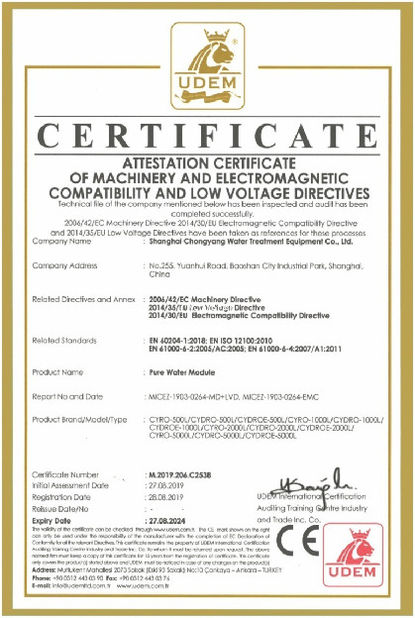
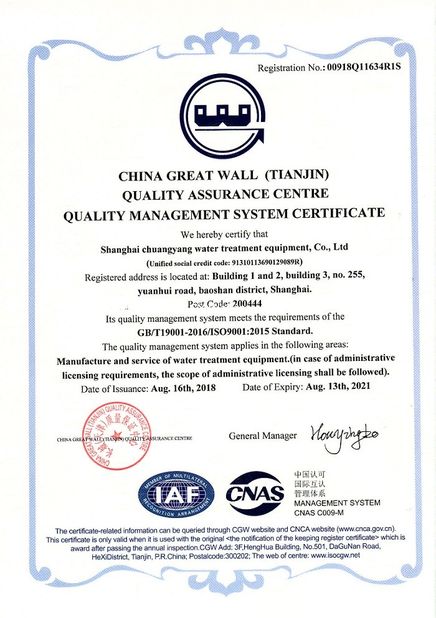
Certification
Company News
What Is the Cost of a Seawater Desalination Plant? | SWRO Cost Guide

What Is the Cost of a Seawater Desalination Plant?
The cost of a seawater desalination plant depends on plant capacity, seawater quality, pretreatment design, energy recovery, automation level, civil works, and final water quality requirements.
For industrial and municipal projects, seawater reverse osmosis, also called SWRO, is one of the most common desalination technologies because it offers practical energy consumption, modular design, and reliable long-term operation.
Introduction
When buyers search for seawater desalination plant cost, they often expect a simple price. In reality, a complete desalination project includes much more than RO membranes. The total budget may include seawater intake, pretreatment, high-pressure pumps, SWRO membranes, energy recovery devices, post-treatment, tanks, instruments, electrical controls, installation, and brine discharge systems.
A small containerized SWRO unit for an island resort and a large coastal industrial desalination plant may use similar core technology, but their cost structure can be very different. Understanding the main cost drivers helps project owners prepare a more accurate budget before requesting a technical quotation.
What Is a Seawater Desalination Plant?
A seawater desalination plant is a water treatment system that removes salt and impurities from seawater to produce fresh water for industrial, municipal, utility, or process applications. The most widely used technology today is seawater reverse osmosis.
A typical SWRO desalination plant includes:
- Seawater intake system or raw seawater tank
- Pretreatment system, such as multimedia filter, UF, or chemical dosing
- Cartridge filter before the RO unit
- High-pressure pump
- Seawater RO membrane skid
- Energy recovery device
- Post-treatment system
- Product water tank and distribution system
- CIP cleaning system and automatic control cabinet
Applications
Coastal Industrial Plants
Used for utility water, boiler make-up pretreatment, process water, and production support.
Island and Resort Water Supply
Containerized seawater desalination systems provide reliable freshwater where municipal water is unavailable.
Municipal Water Supply
Large SWRO plants can supplement drinking water supply for coastal cities and drought-prone areas.
Food and Beverage Facilities
Used for cleaning, rinsing, process water, and production support in coastal factories.
Remote Camps and Offshore Projects
Suitable for construction camps, offshore platforms, ports, and temporary coastal facilities.
Green Hydrogen Projects
Desalinated water can be used as feed water before further polishing for electrolysis systems.
Key Features
| Item | Typical Engineering Scope | Cost Impact |
|---|---|---|
| Plant Capacity | 50 m³/day to 50,000+ m³/day | Large plants have higher total cost but lower unit cost. |
| Pretreatment | Multimedia filter, UF, DAF, dosing, cartridge filter | Major cost driver in turbid or algae-rich seawater. |
| SWRO Membranes | Seawater RO membranes and FRP pressure vessels | Core desalination equipment cost. |
| High-Pressure Pump | Duplex stainless steel pump with VFD optional | Strong impact on CAPEX and OPEX. |
| Energy Recovery Device | PX, turbocharger, or hydraulic ERD | Adds CAPEX but reduces power consumption. |
| Post-Treatment | pH adjustment, remineralization, UV, chlorination | Depends on final water use. |
| Automation | PLC, HMI, conductivity, flow, pressure, level | Improves reliability and remote operation. |
| Civil and Marine Works | Intake, discharge, tanks, foundation, container | Often the largest variable outside the RO skid. |
How It Works
Step 1: Seawater Intake
Raw seawater is collected through an open intake, beach well, or intake tank. Intake design affects the total seawater desalination plant cost because marine construction and discharge permits can be expensive.
Step 2: Pretreatment
Pretreatment protects SWRO membranes from fouling, scaling, and biological contamination. Common equipment includes chemical dosing, multimedia filtration, ultrafiltration, cartridge filtration, dechlorination, and antiscalant dosing.
Step 3: High-Pressure SWRO Desalination
The high-pressure pump raises seawater pressure before it enters the seawater RO membrane skid. The membranes separate fresh permeate from concentrated brine.
Step 4: Energy Recovery
An energy recovery device recovers pressure energy from the brine stream. This helps reduce specific power consumption and lowers long-term operating cost.
Step 5: Post-Treatment
SWRO permeate may require pH adjustment, remineralization, disinfection, or polishing before storage and distribution, depending on whether the water is used for drinking, industrial process water, or further ultrapure water treatment.
FAQ
1. What is the main factor affecting seawater desalination plant cost?
The main factors are capacity, seawater quality, pretreatment complexity, energy recovery design, intake/discharge scope, and automation level.
2. Is SWRO cheaper than thermal desalination?
For most industrial and municipal projects, SWRO is usually more practical because it has lower energy consumption, smaller footprint, and easier modular expansion.
3. Can a seawater desalination plant be containerized?
Yes. Small and medium-capacity SWRO systems can be supplied as containerized desalination plants for islands, resorts, camps, and remote coastal projects.
4. What information is needed for quotation?
Required flow rate, seawater analysis, TDS, final water use, site location, power supply, automation preference, and whether intake/discharge works are included.
Conclusion + CTA
The cost of a seawater desalination plant depends on the full engineering scope, not only the RO membrane price. A realistic budget should include pretreatment, high-pressure pumping, energy recovery, post-treatment, automation, intake works, discharge design, and installation conditions.
CHONGYANG WATER provides customized SWRO desalination systems, containerized seawater desalination plants, industrial pretreatment systems, and turnkey water treatment solutions for coastal factories, islands, resorts, utilities, and remote projects.
Pub Time : 2026-06-25 15:22:57
>> News list
Contact Details
Shanghai ChongYang Water Treatment Equipment CO.,LTD.
Contact Person: Ms. Yanni.Wang
Tel: 86 15900488030
Fax: 86-21-66126659
Send your inquiry directly to us