

 |
|
|
|
- I'm Online Chat Now
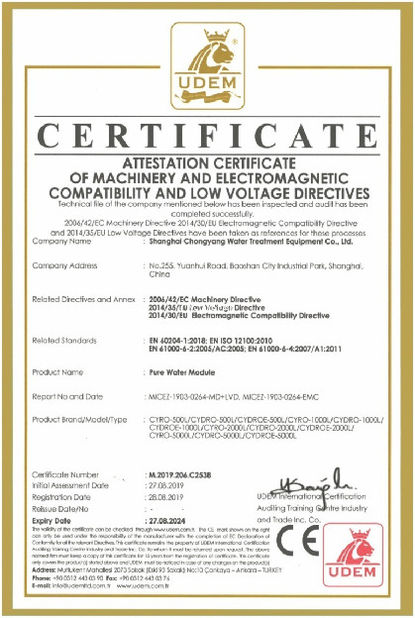
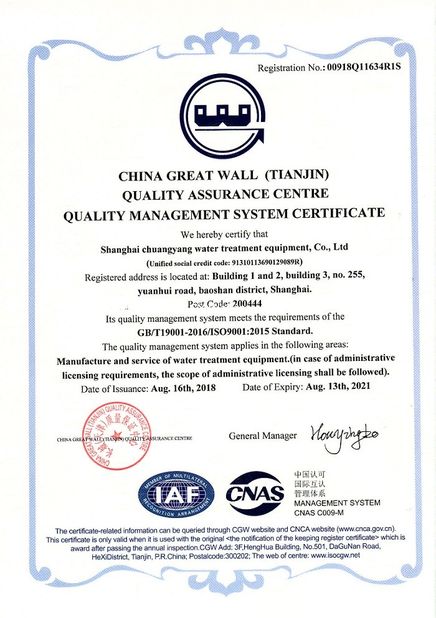
Certification
Company News
Why RO Systems Are Widely Used for Boiler Feed Water

Why RO Systems Are Widely Used for Boiler Feed Water
Introduction
Boiler systems are widely used in industries such as power generation, food and beverage, chemical processing, textiles, electronics, and manufacturing. The performance and service life of a boiler depend heavily on the quality of its feed water. Poor-quality water can lead to scale formation, corrosion, reduced heat-transfer efficiency, higher energy consumption, and unexpected downtime.
Among the available water treatment technologies, Reverse Osmosis (RO) has become the preferred solution for boiler feed water preparation. Modern RO systems remove dissolved salts, hardness, silica, suspended solids, and other contaminants, providing stable feed water for medium- and high-pressure boilers.
When combined with appropriate chemical dosing systems and polishing technologies such as EDI or mixed-bed ion exchange, RO delivers reliable water quality while reducing maintenance requirements and operating costs.
What Is a Boiler Feed Water RO System?
A boiler feed water RO system is a complete water treatment solution designed to supply clean, low-mineral water for steam boilers. The system removes impurities before the water enters the boiler, minimizing scale formation, corrosion, and heat-transfer losses.
A typical boiler feed water treatment system includes:
Raw Water Tank
Raw Water Booster Pump
Multi-Media Filter
Activated Carbon Filter
Water Softener
5 μm Cartridge Filter
Antiscalant Dosing System
SMBS Dosing System
Reverse Osmosis System
Permeate Tank
Boiler Feed Water Pump
Optional EDI or Mixed-Bed Polisher
Boiler Feed Water Tank
PLC / HMI Control System
Modern systems are controlled through PLC and HMI interfaces, enabling automatic operation, conductivity monitoring, pressure protection, alarm management, and remote diagnostics.
Why Reverse Osmosis Is the Preferred Technology
Reverse osmosis membranes typically remove 95–99% of dissolved salts, significantly reducing total dissolved solids, hardness, silica, and other scale-forming substances.
This supports efficient heat transfer inside boiler tubes and reduces the frequency of chemical cleaning and maintenance.
Lower Chemical Consumption
Less dependence on ion-exchange regeneration chemicals.
Reduced Wastewater
Lower regeneration wastewater compared with conventional systems.
Stable Water Quality
Consistent conductivity and mineral removal.
Lower Operating Cost
Reduced maintenance, energy losses, and chemical use.
Improved Boiler Efficiency
Cleaner heat-transfer surfaces improve steam generation.
Longer Equipment Life
Reduced scaling and corrosion protect boiler components.
For high-pressure boilers, RO is often followed by EDI or mixed-bed polishing to achieve ultra-low conductivity and silica levels.
Typical Applications
Power Plants
Food & Beverage Factories
Chemical Manufacturing
Textile Mills
Electronics Production
Paper Mills
District Heating Plants
Pharmaceutical Utilities
Industrial Steam Generation
Process Manufacturing Facilities
Each application has different feed-water and boiler-pressure requirements, making customized engineering design essential.
Key Components of a Boiler Feed Water System
| Component | Function |
|---|---|
| Multi-Media Filter | Removes suspended solids and turbidity. |
| Activated Carbon Filter | Removes chlorine and organic compounds. |
| Water Softener | Reduces calcium and magnesium hardness. |
| Cartridge Filter | Protects RO membranes from fine particles. |
| Antiscalant Dosing System | Prevents calcium carbonate, sulfate, and silica scaling. |
| SMBS Dosing System | Eliminates residual chlorine before RO membranes. |
| Reverse Osmosis System | Removes dissolved salts and impurities. |
| EDI or Mixed Bed | Produces ultra-low conductivity water for high-pressure boilers. |
| Boiler Feed Water Tank | Stores treated water before boiler supply. |
| PLC Control System | Provides automatic monitoring, alarm control, and system protection. |
The Importance of Chemical Dosing Systems
Chemical dosing systems play an important role in both RO membrane protection and boiler-water chemistry control.
Antiscalant Dosing System
Antiscalant is injected before the RO membranes to inhibit scaling caused by calcium carbonate, calcium sulfate, barium sulfate, and silica.
- Higher RO recovery
- Longer membrane life
- Reduced cleaning frequency
- Stable system performance
Sodium Bisulfite Dosing System
Residual chlorine can permanently damage polyamide RO membranes. An SMBS dosing system neutralizes chlorine before water reaches the membrane elements.
- Membrane protection
- Extended membrane lifespan
- Improved RO stability
- Lower replacement cost
Boiler Chemical Dosing
After RO treatment, boiler-water chemistry must also be controlled according to boiler pressure and operating conditions.
- Oxygen scavengers
- pH adjustment chemicals
- Phosphate treatment
- Condensate treatment chemicals
Boiler Feed Water Treatment Process
The following process combines pretreatment, chemical dosing, RO desalination, optional polishing, storage, and controlled delivery to the boiler.
Raw Water
→
Multi-Media Filter
→
Activated Carbon / Softener
→
Antiscalant & SMBS Dosing
→
Cartridge Filter
→
Reverse Osmosis
→
EDI / Mixed Bed
→
Boiler Feed Water Tank
→
Boiler Feed Pump
→
Steam Boiler
How the System Works
Raw water first enters the pretreatment section, where suspended solids, chlorine, organics, and hardness are controlled through filtration, activated carbon treatment, and softening.
Cartridge filters provide final particle protection before the RO membranes. Antiscalant dosing controls mineral precipitation, while SMBS dosing removes residual chlorine.
The RO unit then separates dissolved salts and impurities from the water. Depending on boiler pressure and required conductivity, the permeate may be polished through an EDI unit or mixed-bed ion exchanger.
Finally, treated water is stored in the boiler feed water tank and delivered to the boiler through feed pumps, supporting stable steam generation and long-term boiler protection.
Benefits of Using RO for Boiler Feed Water
Improved boiler efficiency
Lower fuel and energy consumption
Reduced scale formation
Better corrosion control
Longer membrane and boiler life
Lower maintenance costs
Stable steam quality
Reduced chemical consumption
Lower lifecycle operating costs
Conclusion
Reverse osmosis has become the industry-standard technology for boiler feed water preparation because it reliably removes dissolved minerals while reducing maintenance and operating costs.
When integrated with suitable pretreatment, chemical dosing, and optional polishing technologies, an RO boiler feed water system provides consistent water quality for a wide range of industrial applications.
The final configuration should be based on feed-water analysis, boiler pressure, steam demand, operating hours, and the required feed-water quality.
Why Choose CHONGYANG WATER?
CHONGYANG WATER provides customized RO boiler feed water solutions for new boiler projects and existing system upgrades.
Feed-water analysis and process design
Multi-media, carbon, and softening pretreatment
Single-pass and double-pass RO systems
EDI and mixed-bed polishing
Antiscalant, SMBS, pH, and oxygen-scavenger dosing
PLC / HMI automation and remote monitoring
Storage tanks and feed-water pumping systems
Technical drawings and engineering support
Need a Customized Boiler Feed Water RO System?
CHONGYANG WATER can design a complete boiler feed water treatment system according to your raw-water analysis, boiler pressure, steam demand, operating hours, and required conductivity.
Our scope can include pretreatment, RO, EDI, chemical dosing systems, storage tanks, booster pumps, PLC automation, equipment layout, and complete technical support.
Contact CHONGYANG WATER
Pub Time : 2026-07-11 08:21:29
>> News list
Contact Details
Shanghai ChongYang Water Treatment Equipment CO.,LTD.
Contact Person: Ms. Yanni.Wang
Tel: 86 15900488030
Fax: 86-21-66126659
Send your inquiry directly to us