 |
|
|
|


- I'm Online Chat Now
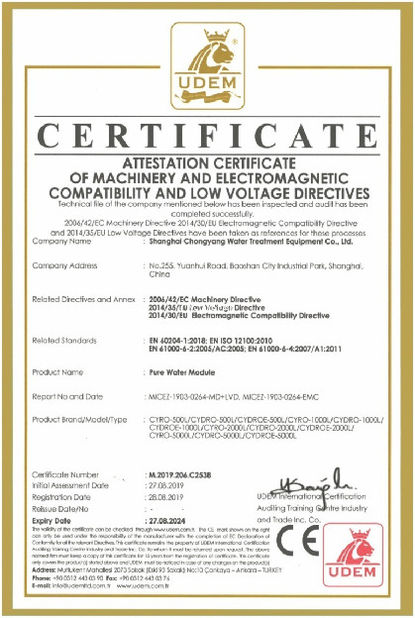
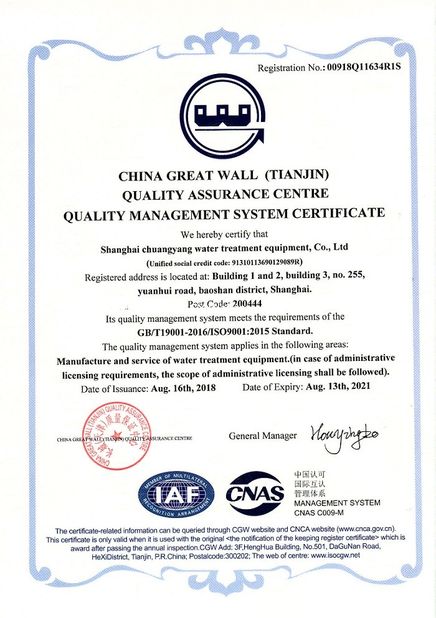
Certification
Seawater Desalination System for Island Drinking Water Supply
Product Details:
Payment & Shipping Terms:
|
Detailed Product Description
| Feed Water Salinity: | ≤45000 Ppm | Water Source: | Seawater |
|---|---|---|---|
| Technology: | Seawater Reverse Osmosis (SWRO) | Product Water Capacity: | 10–1,000 M³/day Or Customized |
| Product Water TDS: | Typically <500 Ppm, Subject To Design | RO Membrane Brand: | DOW / Toray / Hydranautics |
| Pretreatment System: | Multimedia / UF / Customized | Desalination Rate: | ≥99.5% |
| Membrane Housing: | FRP / SS316L | Post-Treatment: | Remineralization + Disinfection |
| Voltage: | 380V / 400V / 415V / 440V / Customized | Application: | Islands / Coastal Communities / Remote Areas |
| Installation Type: | Skid-Mounted / Containerized | Control System: | PLC + HMI Automatic Control And Manual |
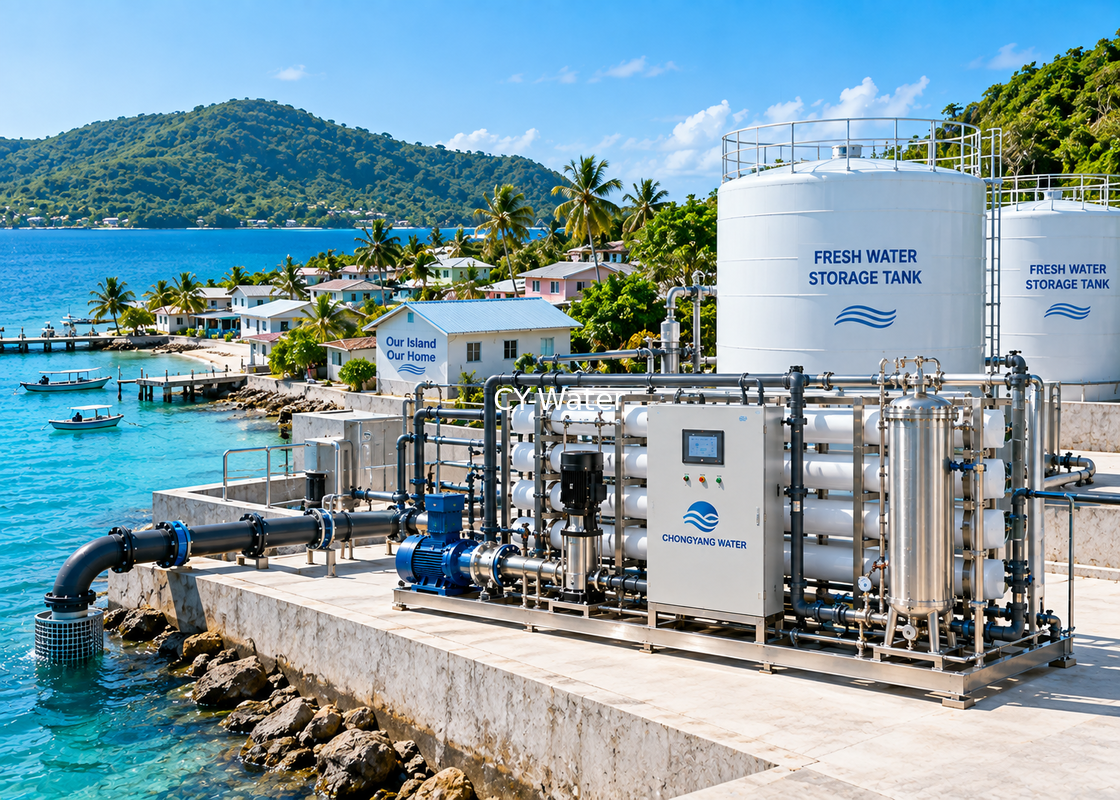
Island Seawater Desalination System | 10-1000m³/Day Drinking Water SWRO Plant
Introduction
An Island Seawater Desalination System converts seawater into freshwater for islands, remote coastal communities, residential areas, public facilities, construction camps, and locations where conventional freshwater resources are limited or unavailable.
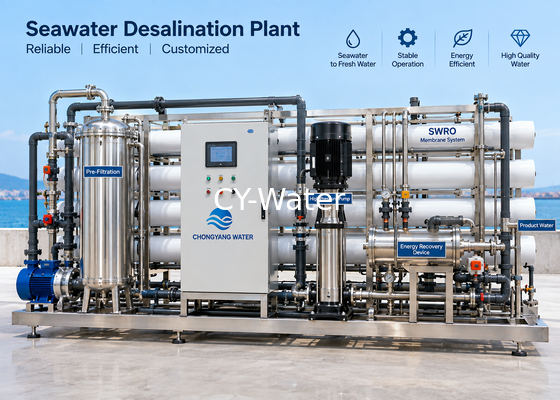
Using Seawater Reverse Osmosis (SWRO) technology, the plant removes dissolved salts from seawater through high-pressure membrane separation. The RO permeate can then undergo remineralization and disinfection before being supplied to freshwater storage tanks and local drinking-water networks.
CHONGYANG Water provides skid-mounted, modular, and containerized island desalination plants with capacities customized according to population, daily consumption, operating hours, seawater quality, and site infrastructure.
What Is an Island Seawater Desalination Plant?
An island seawater desalination plant is an integrated water-production system designed to provide a reliable freshwater source where groundwater, surface water, or municipal water supplies cannot meet local demand.
The system normally combines seawater intake, pretreatment, chemical dosing, cartridge filtration, a high-pressure pump, SWRO membranes, product-water storage, and suitable post-treatment.
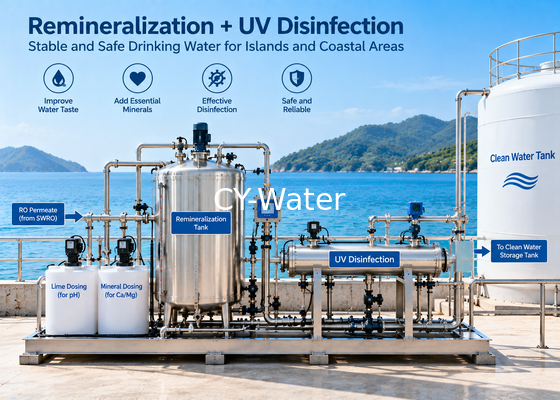
For drinking-water applications, the desalinated water can be stabilized through remineralization and pH adjustment and then disinfected using UV, chlorination, or another suitable process according to the required local drinking-water specification.
Island Drinking Water Desalination Process
A typical island drinking-water SWRO system follows the process below:
Seawater Intake
Feed Pump
Pretreatment
Chemical Dosing
Cartridge Filter
High-Pressure Pump
SWRO
Remineralization
Disinfection
Freshwater Tank
Water Supply
Mobile: Swipe horizontally to view the complete desalination process.
Pretreatment for Different Island Seawater Conditions
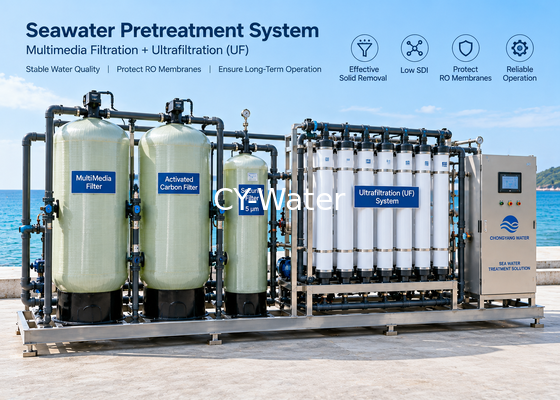
Pretreatment is selected according to the seawater intake method and raw-water quality. Beach-well seawater may have relatively low turbidity, while open-intake seawater can contain suspended solids, algae, microorganisms, and seasonal organic loading.
Multimedia Filtration Ultrafiltration (UF) Coagulation Dechlorination Antiscalant Dosing Cartridge Filtration
For seawater with high turbidity or significant biological loading, UF pretreatment can be considered to provide more stable feed conditions for the downstream SWRO membranes.
Recommended Capacity for Island Freshwater Supply
The final capacity should be calculated from population, per-capita consumption, public facilities, peak demand, operating hours, and freshwater storage requirements.
| SWRO Capacity | Typical Application | Suggested Configuration |
|---|---|---|
| 10–30 m³/day | Small Island Facilities | Compact SWRO Skid |
| 30–100 m³/day | Small Communities | Pretreatment + SWRO + Post-Treatment |
| 100–300 m³/day | Medium Island Communities | SWRO + ERD + Drinking-Water Treatment |
| 300–500 m³/day | Municipal / Public Water Supply | Containerized or Modular SWRO |
| 500–1,000+ m³/day | Large Island Water Projects | Multi-Train SWRO + ERD |
Capacity ranges are engineering references only. Final sizing should be based on actual project water demand.
From SWRO Permeate to Drinking Water
SWRO permeate has very low mineral content. When the final application is drinking water, post-treatment should be engineered according to the required water-quality standard.
Remineralization pH Adjustment UV Disinfection Chlorination Freshwater Storage
Final potable-water quality should comply with the applicable requirements of the destination country or project specification.
Containerized SWRO Plant for Remote Islands
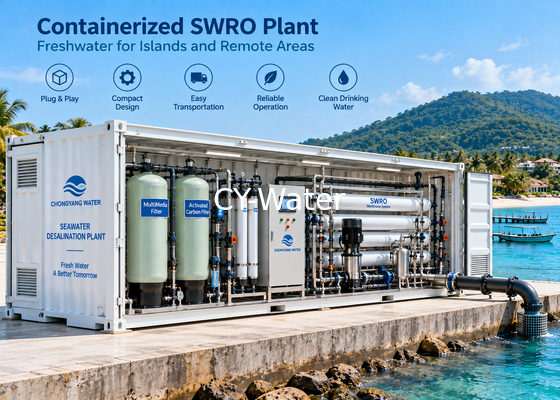
Remote island projects often have limited construction resources and equipment-room space. A containerized seawater desalination plant can integrate the main treatment equipment into a factory-assembled modular package.
Depending on capacity, the container can incorporate pretreatment, dosing systems, cartridge filters, high-pressure pumps, SWRO membranes, energy recovery, CIP, electrical controls, instrumentation, lighting, ventilation, and other auxiliary equipment.
This arrangement reduces field assembly work and simplifies transportation, installation, commissioning, and equipment protection in coastal environments.
Energy Recovery for Continuous Island Operation
High-pressure pumping is one of the major energy consumers in seawater reverse osmosis. For medium and large island desalination plants, an Energy Recovery Device (ERD) can recover hydraulic energy from the high-pressure concentrate stream.
The suitability of an ERD should be evaluated according to plant capacity, operating hours, feed-water salinity, electricity cost, and lifecycle economics.
Typical Technical Parameters
| Parameter | Typical Design |
|---|---|
| Feed Water | Seawater |
| Typical Feed TDS | 30,000–45,000+ mg/L |
| Capacity | 10–1,000+ m³/day or Customized |
| Operating Pressure | Approx. 55–70 bar |
| Recovery | Approx. 35–50% |
| Salt Rejection | Typically ≥99.5% |
| Pretreatment | Multimedia / UF / Customized |
| Post-Treatment | Remineralization + Disinfection |
| Installation | Skid-Mounted / Containerized |
| Control | PLC + HMI Automatic Control |
Typical Applications
Island Communities Remote Villages Coastal Communities Public Water Supply Schools & Clinics Construction Camps Remote Facilities Emergency Water Supply
Frequently Asked Questions
Can seawater desalination produce drinking water?
Yes. SWRO removes most dissolved salts from seawater. For potable-water supply, the permeate normally requires suitable remineralization, pH stabilization, and disinfection according to the applicable drinking-water requirements.
How do we determine the required plant capacity?
Capacity should be calculated from the population, estimated daily consumption, peak demand, operating hours, public or commercial water demand, and available freshwater storage capacity.
Can the system operate automatically?
Yes. The SWRO plant can be equipped with PLC and HMI control, automatic flushing, conductivity monitoring, pressure protection, tank-level control, alarms, and automatic start/stop logic.
Is UF pretreatment always required?
No. Pretreatment should be selected from the actual seawater analysis and intake conditions. UF is particularly useful where turbidity, suspended solids, algae, or biological loading are relatively high or variable.
Can the plant be installed in a container?
Yes. Containerized SWRO is well suited to remote islands because major equipment can be factory assembled before shipment, reducing on-site installation work.
Reliable Freshwater Production for Island Projects
A reliable island desalination project requires coordinated engineering of seawater intake, pretreatment, high-pressure SWRO, energy recovery, post-treatment, storage, automation, and distribution.
CHONGYANG Water can customize island seawater desalination systems according to seawater quality, required freshwater capacity, installation conditions, electrical supply, and final water-quality requirements.
ISLAND DRINKING WATER SOLUTION
Need a Seawater Desalination Plant for Your Island Project?
Send us your seawater analysis, required freshwater capacity, estimated population, daily operating hours, required drinking-water quality, power supply, and project location.
Our engineers can configure the pretreatment, SWRO membrane system, energy recovery, remineralization, disinfection, storage, and automatic control system for your project.
Tag:
de salination plant,
swro
Contact Details
Shanghai ChongYang Water Treatment Equipment CO.,LTD.
Contact Person: Ms. Yanni.Wang
Tel: 86 15900488030
Fax: 86-21-66126659
Send your inquiry directly to us
More Seawater Desalination Systems
-
Seawater Desalination Plant for Hotels & Resorts | 5-1000m³/Day SWRO System
-
Boat Watermaker | Compact Boat Desalination System for Marine Fresh Water Supply
-
Commercial Seawater Desalination Plant for Hotel Resort Factory and Municipal Fresh Water Supply Projects
-
Turnkey Seawater Desalination System Manufacturer for Industrial Water Purification and Water Treatment Projects
-
High Efficiency Reverse Osmosis Seawater Treatment Plant for Industrial Desalination and Water Purification
-
Offshore Seawater Desalination Equipment for Marine Platform Vessel and Island Drinking Water Production